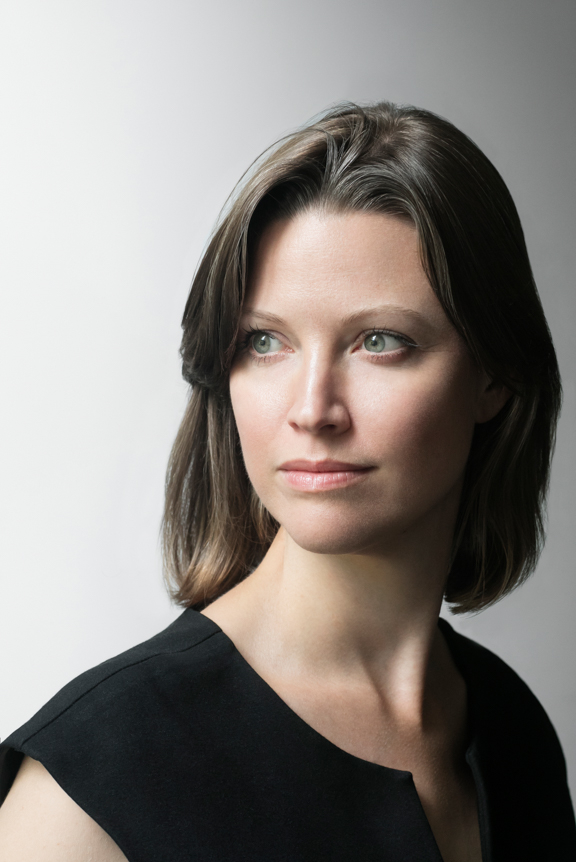
Tana Wojczuk

"Don't try to solve serious matters in the middle of the night." — Philip K. Dick

GUERNICA: WHAT MONEY CAN’T BUY

Posted on May 4th, 2012

AN INTERVIEW WITH PROFESSOR MICHAEL SANDEL ON HIS NEW BOOK OUT FROM FSG AND A SOCIETY WHERE EVERYTHING MIGHT BE UP FOR SALE.

Author Michael Sandel’s new book What Money Can’t Buy is troubling in the best sense of the word—it “troubles” the complacency with which Americans have received the rapid encroachment of the market into private life. Economics has expanded in the post-freakonomics world and in a global market, according to Sandel, and that expansion has resulted in an historically intrusive use of market forces into “non-market spheres” like education.

In his book, Sandel explains in both intellectual and historic terms how expansionist ideas of the role of economics coincided with the Reaganite elevation of lassiez-faire economics into something like a religion. Sandel frames the issues he finds problematic and shows how “intrinsic values” such as the love of learning for its own sake, can be threatened when market forces are applied—for example, bribing students to do better in school or public schools seeking out corporate sponsors due to budget cuts.

The framework Sandel provides will ideally challenge readers to see the world differently, like the moment in the cult classic They Live (see Jonathan Lethem’s book-length criticism of the film) where the hero puts on a pair of bodacious ray-ban sunglasses and suddenly sees billboards advertising sunny vacations in fact read “OBEY.” What Money Can’t Buy identifies a few of the many areas where market encroachment is problematic (paying to kill an endangered rhino, paying for the right to pollute, branded education) and equips readers with the questions that, Sandel hopes, will begin a public debate about what money should or shouldn’t buy… —Tana

(Read the full article and interview in the latest issue of Guernica Magaine)

THE BELIEVER: DRYING IN THE WILDERNESS

Posted on May 4th, 2012

HOW UNSHAKABLE MYTHS ABOUT THE WEST AND ITS SETTLERS HELPED LEAD TO CALIFORNIA’S CURRENT ENVIRONMENTAL CRISIS

DISCUSSED: Propaganda for Manifest Destiny, A Proposal for Communal Grazing, Ruinous Aqueducts, Sprinklers, A Vision for the Arid Region, Cocktails with Ansel Adams, Root Causes, Green Ideas, The Endless Deferral of the Eureka Moment

I. DYNAMITE

In 1868, the West was a mythical place, a land associated with boundless acreage for the speculator, infinite glory for the intrepid mountaineer, and rich veins of ore for the prospector. Just a few years before the American centennial, very little was actually known about what lay beyond the 98th meridian. This invisible line––which runs through the heart of Texas and cuts the corners off Oklahoma, Kansas, and Nebraska––was at that time on the far side of America’s western border. Maps depicted the area with a few chicken-scratches for hypothetical mountain ranges and designated it with the words The Great American Desert.

As European explorers ventured into India and Africa, an American self-styled naturalist named John Wesley Powell took it upon himself to map the unexplored territory of the West and catalog its resources. Powell was an unlikely mountain man. Although physically fit, with a barrel chest and the full beard that was his trademark, he’d lost an arm as an officer in the Civil War, and much of his scientific training consisted of reading voraciously from books sold by traveling salesmen. With his characteristic energy, Powell mustered a small group of hunters and former Civil War soldiers, including his brother, to mount a cartographic expedition down the length of the Colorado River. The success of this expedition made Powell, for a brief time, a national hero, and gained him the financial support he needed for his most ambitious undertaking—to map the entire West, including every stream, river, and pool of runoff.

At this time, the American government was in thrall to the expansionist goals expressed in the idea of Manifest Destiny: Americans had the divine right—theresponsibility—to expand across the continent. The futurist writer and governor of Colorado, William Gilpin, did his part to aid Manifest Destiny. A speculator who believed his landgrabs to be divinely sanctioned, he vividly described the West to Eastern newspapermen and eager audiences as a second Eden, a fertile land with bountiful aquifers deep below the desert surface. Gilpin played fast and loose with scientific facts, inventing rainfall, diverting streams, and telling anxious farmers not to worry about rumors of aridity, because “the rain followed the plow.”

Powell, however, recognized early on that the West would be inhospitable to traditional large-scale farming, and foresaw that irregular rainfall would create a reliance on irrigation. This meant that the West would come to be defined by water rights. Without government regulation, he warned Gilpin and others in Washington, wealthy speculators would gain complete control over water, creating a feudal system that left farmers in the dust.

Powell published his preliminary findings in a federal report, still believing that there was time to create a plan for sustainable Western development. But while Powell believed he was writing a scientific report, to the government it was a dangerous manifesto. The federal commission had wanted him merely to create a map of irrigable land. But Powell’s report showed far less of that land than was hoped for, and his analysis of the problem and how to solve it resulted in a guide for limited, regulated settlement of the West. The commission responded by slashing Powell’s budget from $720,000 to $162,500. Powell’s report was, as his biographer Wallace Stegner later wrote, “loaded with dynamite.” —Tana 

(Read the rest of the excerpt at Believermag.com. To read the full article buy the issue here or at your local bookstore.)

GUERNICA MAGAZINE: INTERVIEW WITH JOHN GUARE

Posted on March 30th, 2012

American playwright John Guare on Tennessee Williams, writing strong dialogue, and discovering a New Orleans lost in history.

Every year New Orleans hosts a festival named for their adopted native son, American Playwright and longtime New Orlenian Tennessee Williams. This year contemporary American playwright John Guare will speak at several panels, and one can only hope he will attend the annual “Stella!” shouting contest. I sat down with Guare to discuss his most recent play, set in New Orleans and the influence of Tennessee Williams, an artist Guare credits with bringing American language into the theater.

As Guare puts it, New Orleans was a “magic place” for Tennessee Williams, a place that allowed him to stretch who he was (literally, by changing his name). Guare is the author of several Tony and Obie-award-winning plays including Six Degrees of SeparationHouse of Blue LeavesLandscape of the Body and Bosoms and Neglect. Like Williams, he is also fascinated by New Orleans. One of Guare’s most recent plays reveals a secret history of the city before the Louisiana Purchase made it officially part of America. Free Man of Color takes place in New Orleans where racial integration was the norm, and the bustling international city was home to free men of every race and creed. Part of what the play offers to audiences is the chance to see history as recursive—how attitudes toward race and sex swing back around, revealing both that history is not progressive and that historical moments repeat themselves.

Although Guare’s plays take place at particular moments in time, they continue to feel contemporary. For example House of Blue Leaves, which was re-mounted last year on Broadway, deals with contemporary issues like terrorism and PTSD. In the play a soldier gone AWOL hatches a secret domestic terrorism plot (in this case, to blow up the Pope). But this almost accidental timeliness isn’t all that makes Guare’s plays evergreen.

Guare’s language stays fresh because it does not rely on cultural shorthand to make an argument or express what a character is feeling. Instead, his language is direct and clear: an actor reading his lines knows when to cringe or when to move across the stage. At the same time, the meaning of every line is not always spelled out. This allows the audience to participate in creating the meaning of the words, inferring what a character thinks and feels. False starts are never truly false, instead they reveal what characters want to say or are afraid to let slip.

As it was for Tennessee Williams, language is a primary concern for Guare—to him, all of the actions and characterizations in a play should be embedded in the dialog itself. Guare’s own conversational style dramatizes this. Several times in our interview he stopped me to correct an imprecision in my question, not the question itself but how it was phrased. His insistence on correct speech seems to me characteristic of a profession whose masters must always ask themselves: “How will I communicate what I’m trying to get across to a room full of strangers sitting in the dark?” —Tana [MORE]

GUERNICA MAGAZINE: FUKUSHIMA FORETOLD IN 1976

Posted on March 11th, 2012

March 11th will mark the one-year anniversary of the Fukushima Daiichi nuclear disaster in Japan. Cleanup is still under way and the level of radiation exposure is still unknown. The massive earthquake and Tsunami that hit Japan are rightly blamed for the disaster at Fukushima but in fact the origins of the problem are far older and more sinister. In 1976 three nuclear engineers resigned from General Electric over massive safety issues they foresaw for nuclear power. The Mark1 reactor they helped design and build was the same reactor that failed at Fukushima. The engineers, Dale G. Bridenbaugh, Richard B. Hubbard and Gregory C. Minor, became known as the “GE Three.” Their defection came just as concerns over nuclear power were beginning to go mainstream, and the GE Three provided expert testimony that helped catalyze America’s first anti-nuclear movement.

Gregory C. Minor’s son, Mark, recalls the incident that finally spooked his father into quitting. Minor had worked on the reactor and control room design for a GE Plant called “Brown’s Ferry” in Alabama. His role at GE was to increase plant security by simplifying the controls and adding layers of defense. “It was stupid human error,” Mark says. The plant had backup plan after backup plan but one employee “went looking for leaks with a candle and caught the electrical system on fire.” [MORE—Tana

INTERVIEW: NATIONAL GEOGRAPHIC “EXPLORER OF THE YEAR”

Posted on March 9th, 2012

National Geographic Explorer Albert Lin didn’t start out as a tomb explorer. When he first decided to change his life he was an engineering student, just finishing his PhD and living on friends’ couches. Rather than follow the usual path of getting a job in a lab somewhere, Lin decided to explore a mystery that kept rolling around in his head: where do I come from? Who am I? It was a simple but powerful question that would lead him on a quest to Northern Mongolia, to an existence even more nomadic than couch-surfing, and, ultimately, to the tomb of one of history’s most mysterious conquerors: Genghis Khan.

It is rare to have an interview subject who is as good a storyteller as Albert Lin, and I’ll avoid telling you the story here because he tells it so well himself. But what stands out most about Lin’s adventures is his passion for living his life fully and his willingness to endure hardship in order to see his ideas come to life. As he said to me, we all have passions we push to the back of our heads because they don’t seem practical or we don’t have the training. But is anyone trained to be an adventurer? From talking to Lin, I’m convinced that the only training you need is guts. Lin may seem like an Indiana Jones type, but his real courage seems to come from his willingness to dedicate himself totally to an impractical ideal, and his ability to make it happen through his own hard work. A warning to readers: Lin’s enthusiasm is contagious. Send us a letter and let us know what he inspires you to do. —Tana  [MORE AT MYOO.COM]

HUFFINGTON POST: RUST BELT’S CITY OF MURALS

Posted on February 2nd, 2012

As steel mills and other industry began shutting down across the Rust Belt in the recessions of the 1970s and 80s, a small group of Ohioans got together to try save their town and do more with less. Over the next 10 years the sides of dilapidated buildings in Steubenville, OH began to blossom with murals celebrating the city’s history as an industrial town and –surprisingly– the home of early film icon Dean Martin. Steubenville was soon re-christened the City of Murals and the artwork that decorated the once-depressed town brought in thousands of tourists (and much-needed tourist dollars).

My father Michael Wojczuk was the muralist for several of the first City of Murals projects and the idea of a city of murals awoke my imagination. I remember dad bringing home Steubenville t-shirts imprinted with steam pipes and the city’s motto ‘you gotta be tough!’ which I wore every day to elementary school while feeling very tough indeed. [MORE—Tana 

Belinda McKeon tomorrow night at Litquake

Posted on October 11th, 2011

Author and playwright Belinda McKeon reads tomorrow night (Tuesday) at Litquake‘s Young Ireland event here in San Fransisco.  Belinda’s gorgeous debut novel “Solace” came out this fall.

8pm at the Swedish American Hall on 2174 Market Street. Tickets are $10

You Gotta be Tough! City of Murals article at MYOO

Posted on August 26th, 2011

Steubenville was soon re-christened the City of Murals and the artwork that decorated the once-depressed town brought in thousands of tourists (and much-needed tourist dollars). My father Michael Wojczuk was the muralist for several of the first City of Murals projects and the idea of a city of murals awoke my imagination. I remember dad bringing home Steubenville t-shirts imprinted with steam pipes and the city’s motto ‘you gotta be tough!’ which I wore every day to elementary school while feeling very tough indeed.

Read my essay on the mural project and check out Ohioan Tony Nicholas’ amazing photo essay on the City of Murals, here.  Photo courtesy Tony Nicholas.

Follow

Get every new post delivered to your Inbox.